Sea Turtles of Roatán: What Every Diver Should Know
If you’ve dived Roatán’s reefs more than once, you’ve probably already met one: a green or hawksbill turtle gliding along a wall like it owns the place. Here’s what to know about the turtles you’ll meet, where to find them, and how to make sure the encounter goes well for both of you.
You’ll probably meet a green or a hawksbill
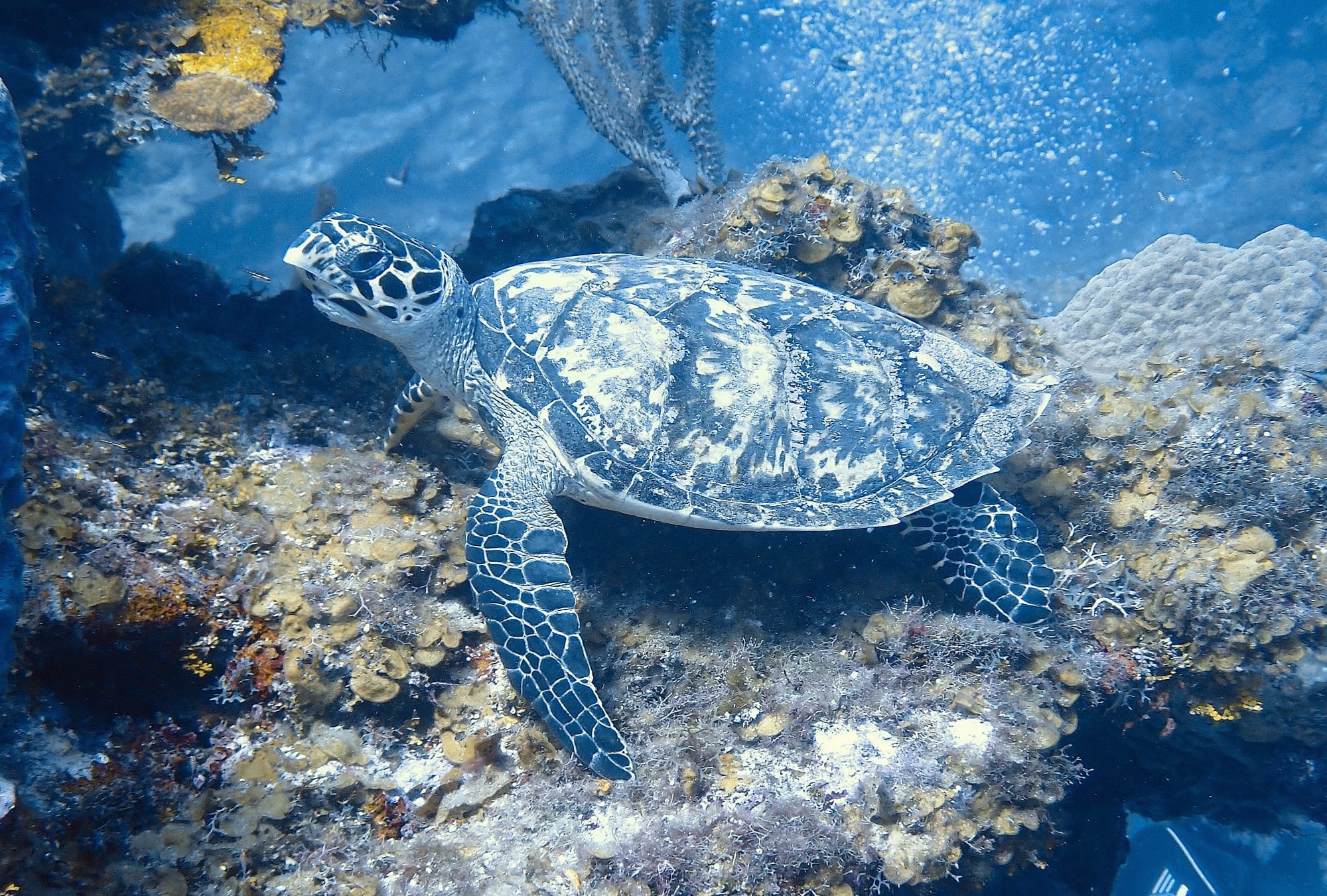
Green and hawksbill turtles are the two you’re most likely to see on a Roatán dive. Greens are named for the greenish color of their fat, not their shell; it comes from their diet of seagrass and algae. Hawksbills get their name from a narrow, curved beak, and they’re reef specialists that favor sponges, which is exactly why they’re so at home on Roatán’s sponge-rich walls. Hawksbills were hunted hard for their patterned shell for generations, and even though that trade’s been banned for decades, they’re still critically endangered. Roatán is genuinely one of the better places left in the Caribbean to see one.
Loggerheads and leatherbacks show up too — just less often
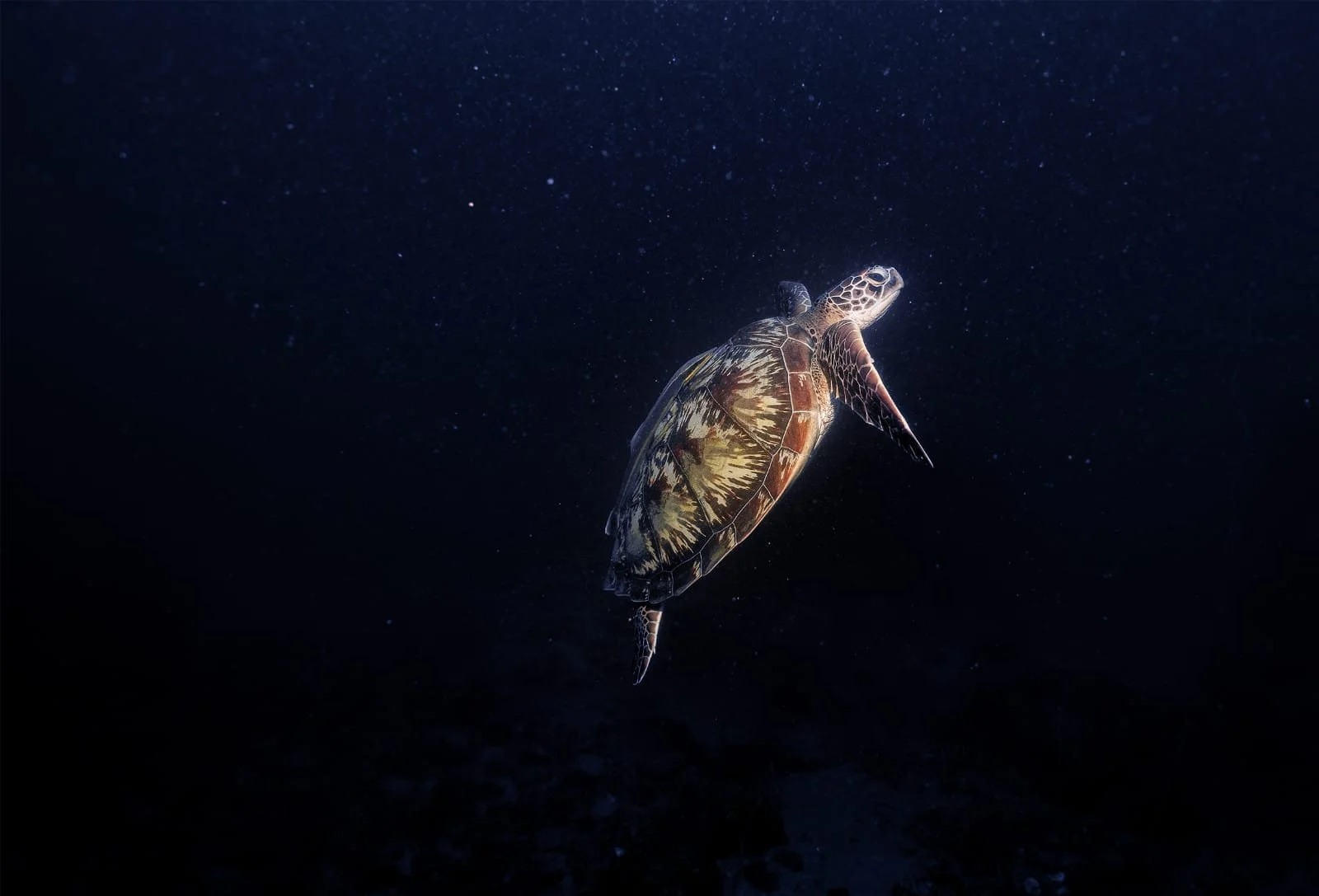
Loggerheads have a broad head and a jaw built for crunching conch and crabs; they turn up less often than greens and hawksbills, usually near the island’s nesting beaches. Leatherbacks are the rare one. Deep-water wanderers that can weigh close to a ton, with a flexible shell instead of a hard carapace. If you see one, consider it a genuinely lucky dive.
2025 was a big year for green turtles
In October 2025, the IUCN reclassified green sea turtles worldwide from Endangered to Least Concern. Their global population is up an estimated 28% since the 1970s, thanks to decades of nesting-beach protection and fishing-gear reforms. It’s one of the bigger conservation wins in recent memory. Hawksbills haven’t caught the same break, though — they’re still critically endangered, which is part of why groups like Roatán Marine Park keep doing what they do.
Where you’re most likely to see one
A few sites stand out, including two right off our own dock in Sandy Bay. Overheat Reef and Four Sponges are both regular hawksbill spots — the second one is basically named for their favorite food. Turtle Crossing, between West End and West Bay, earns its name honestly. West End Wall, Tortuga Terrace, and Fish Den all turn up sightings on a regular basis too.
A few house rules when you meet one
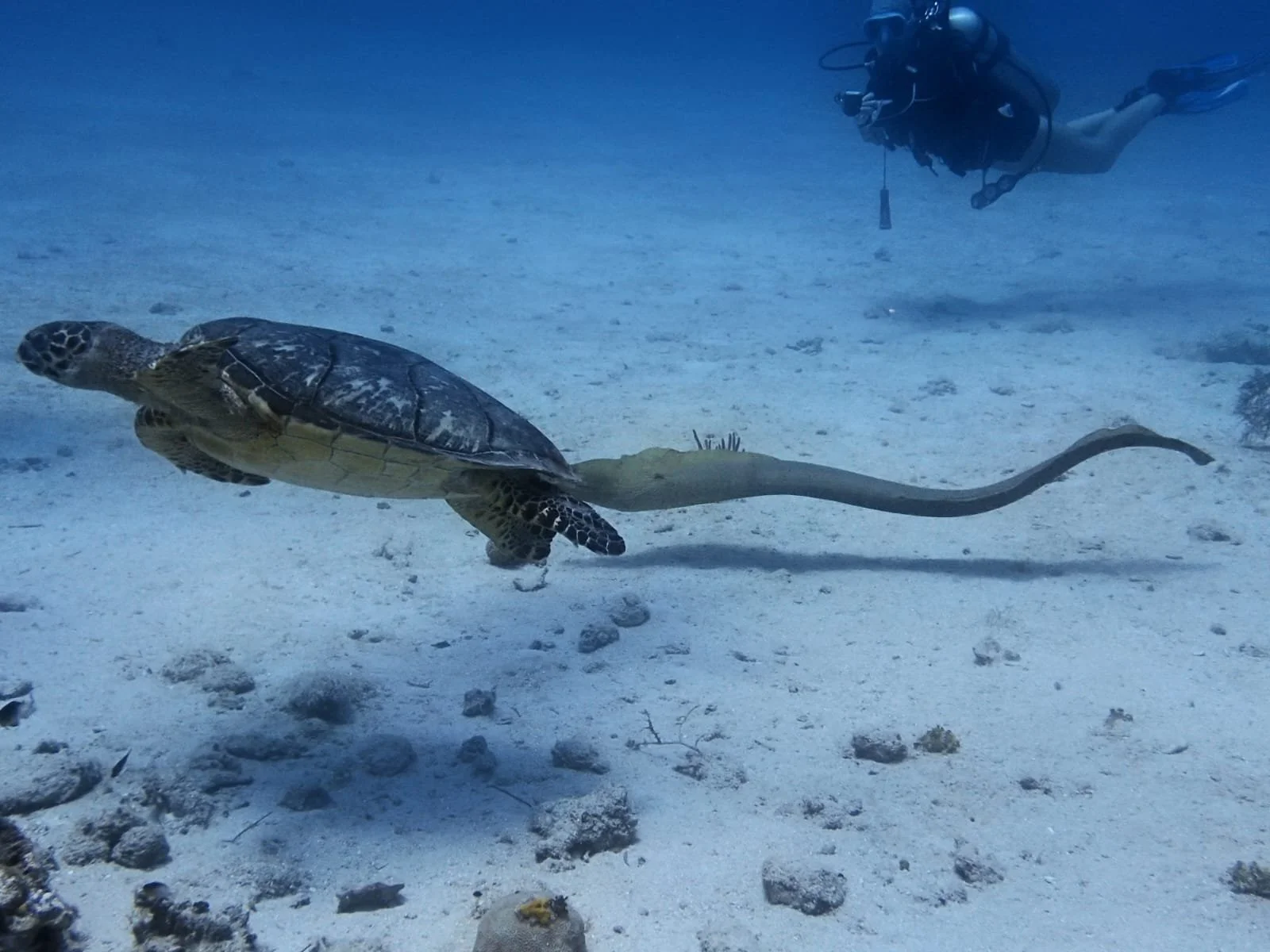
Keep at least 6 feet back, more if you can. If a turtle wants to come closer, that’s its call, not yours. Move slowly, skip the chase, and never corner one against the reef or the surface. They need a clear path up to breathe. And it should go without saying, but never touch one; their shells and skin are more sensitive than they look.
A few questions we get a lot
What kind of turtles will I actually see?
Mostly green and hawksbill. Loggerheads show up now and then, and a leatherback sighting is rare enough that you’d remember it.
Is it okay to touch one if it comes right up to me?
No! Never touch a turtle. It can strip the protective coating off their shell and skin, and it’s against the rules in the Bay Islands National Marine Park anyway. Look, don’t touch.
Are Roatán’s turtles endangered?
Depends which one. Hawksbills are still critically endangered. Greens actually got some good news in October 2025 — the IUCN moved them to least concern. Loggerheads and leatherbacks are considered vulnerable.
Best time of year to see them?
Honestly, any time — they’re residents, not seasonal visitors.
Do I need to be certified, or can I snorkel with them?
Both work. Several dive sites are shallow enough to snorkel, and most turtle sites sit comfortably within Open Water limits, so newer divers see plenty too. Same distance rules either way.
Want to see one yourself? Book a reef dive at sandybaydivers.com/book-a-dive, or ask us about it next time you’re in the shop. Turtles show up on most of our dives — we just can’t promise which kind.